When a World Cup knockout match hits peak intensity, the last thing you need is a medical emergency leaving your team scrambling. A player suffers a head injury. The clock keeps ticking. Pressure mounts instantly. To navigate these high-stakes moments, you need to understand the concussion substitute protocol rules in world cup knockouts. This guide covers everything—from IFAB’s core mandates to the specific nuances that can change a tournament’s outcome.
Concussion Substitute Protocol Rules in World Cup Knockouts: The Complete Guide
During World Cup knockout stages, teams can use an additional permanent concussion substitution if a player suffers a suspected head injury. Concussion Substitute Protocol Rules in World Cup Knockouts: The Complete Guide. This emergency replacement does not count against the standard five tactical substitutions or extra-time allowance. To maintain competitive balance, the opposing team is granted a matching extra substitution.The Core Concussion Substitute Protocol (IFAB Rules)
Before looking at the World Cup stage, here’s some context. The protocol became a permanent fixture in the Laws of the Game in March 2024. It was trialed successfully during the 2022 FIFA World Cup. Now, it’s a standard requirement for major global tournaments.
- One concussion substitute per team: You get exactly one per match, regardless of how many standard substitutions you’ve already used.
- Permanent removal: Once flagged for a potential concussion, that player is out for the match. They cannot return—not even for a penalty shootout.
- Opponent parity: To keep things fair, the opposing team gets one additional substitute and one extra substitution opportunity to use as they see fit.
- Flexibility: If tournament rules allow—and FIFA does—a player subbed off earlier can actually return as the concussion substitute.
The process is straightforward but needs coordination. The team informs the referee or fourth official, usually using a distinct card or form to signal the change. The concussed player heads to the medical area immediately. Crucially, the referee then tells the opposing manager they’ve earned an extra substitution window. They can use it right away or save it for later in the game.
How FIFA Implemented the Protocol for the World Cup
First Adoption – 2022 FIFA World Cup Qatar
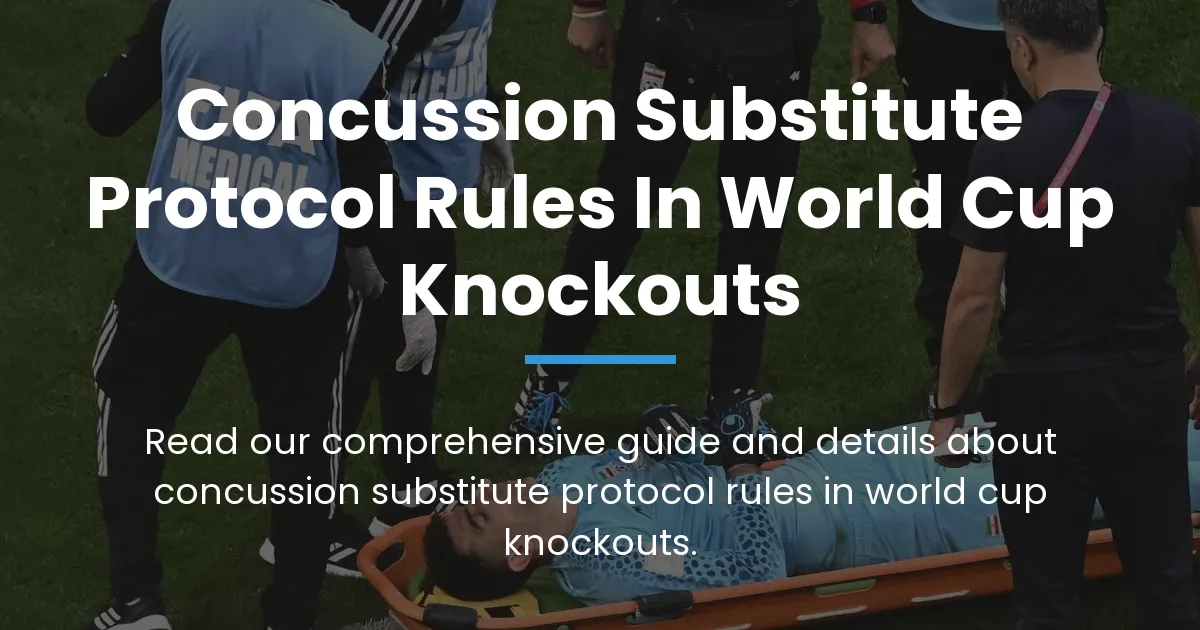
FIFA was a proactive early adopter. They tested the trial protocol throughout the 2022 tournament. The goal was simple: prioritize player safety without ruining tactical integrity. The most notable case came during the group stage match between Iran and England. Goalkeeper Alireza Beiranvand was replaced after a heavy collision. That set a clear precedent for how the system works under pressure.
2026 World Cup and Beyond
Moving into the 2026 World Cup, these concussion substitute protocol rules in world cup knockouts are no longer a trial. They are the law. Expect consistent application across both men’s and women’s tournaments. Safety standards will remain uniform regardless of the venue or stage.
Knockout Stage Specifics – Extra Time and Penalties
In a knockout match, every substitution carries immense weight. When the game pushes into extra time, understanding these mechanics is vital for any coaching staff. You should also be aware of the specific extra time substitution limit rules for knockout phase matches to ensure you manage your squad’s fatigue effectively alongside concussion safety.
Extra Time Nuances
The concussion substitute stays available throughout extra time. It’s entirely independent of any additional substitution slots FIFA grants for the extra period. Even if a team has exhausted their five regular subs, they still have that one concussion substitute in their back pocket if an emergency arises.
Penalty Shootout Implications
If a player is removed for a concussion, they cannot participate in a penalty shootout. Period. The player brought on as the concussion substitute—or any other eligible player on the pitch—can take a spot-kick. The opposing team’s “bonus” substitute can also step up, as long as they were on the field when the final whistle blew, and they are among the eligible players for penalty shootout after red card sendings.
Real and Hypothetical Examples
Hypothetical Quarter‑Final Scenario
Imagine Team A holds a narrow 1‑0 lead in the 70th minute. Their midfielder suffers a head injury. They use their concussion substitute to bring on fresh legs. Team B, per the rules, immediately gains an extra sub. They might hold it in reserve, waiting until the 80th minute to bring on a pacy winger chasing an equalizer. If the game goes to extra time, Team A still has their remaining normal subs—but zero concussion subs left. This creates a fascinating strategic layer where medical safety directly influences tactical planning.
Match Officials’ Role
Referees and fourth officials aren’t doctors. Their role is purely administrative. They facilitate the change. They ensure the opposing team is notified. They document the incident for FIFA’s medical committee. In the heat of a knockout game, their job is to stay neutral. The medical staff—not the referee—has the final say on the player’s condition. For complex scenarios, officials also refer to the ABBA penalty shootout format rules to manage the end of the game after all substitutions have been finalized.
Frequently Asked Questions
- How many concussion subs are allowed? Only one per team, per match.
- Does this count against my normal subs? No, it’s a separate allowance.
- Can a subbed-off player return? Yes. FIFA regulations permit a previously substituted player to return as a concussion replacement.
- What if a second concussion occurs? The team must use a normal substitution if they have any left. They do not get a second concussion sub.
Conclusion
Mastering the concussion substitute protocol rules in world cup knockouts is essential for anyone involved in the professional game. Keep the concussion sub separate from your standard tactical changes. This ensures player safety is prioritized without forcing a team to play at a disadvantage. As we look toward future tournaments, these rules serve as a vital safeguard. The drama of the World Cup stays focused on the beautiful game—not avoidable medical tragedies.