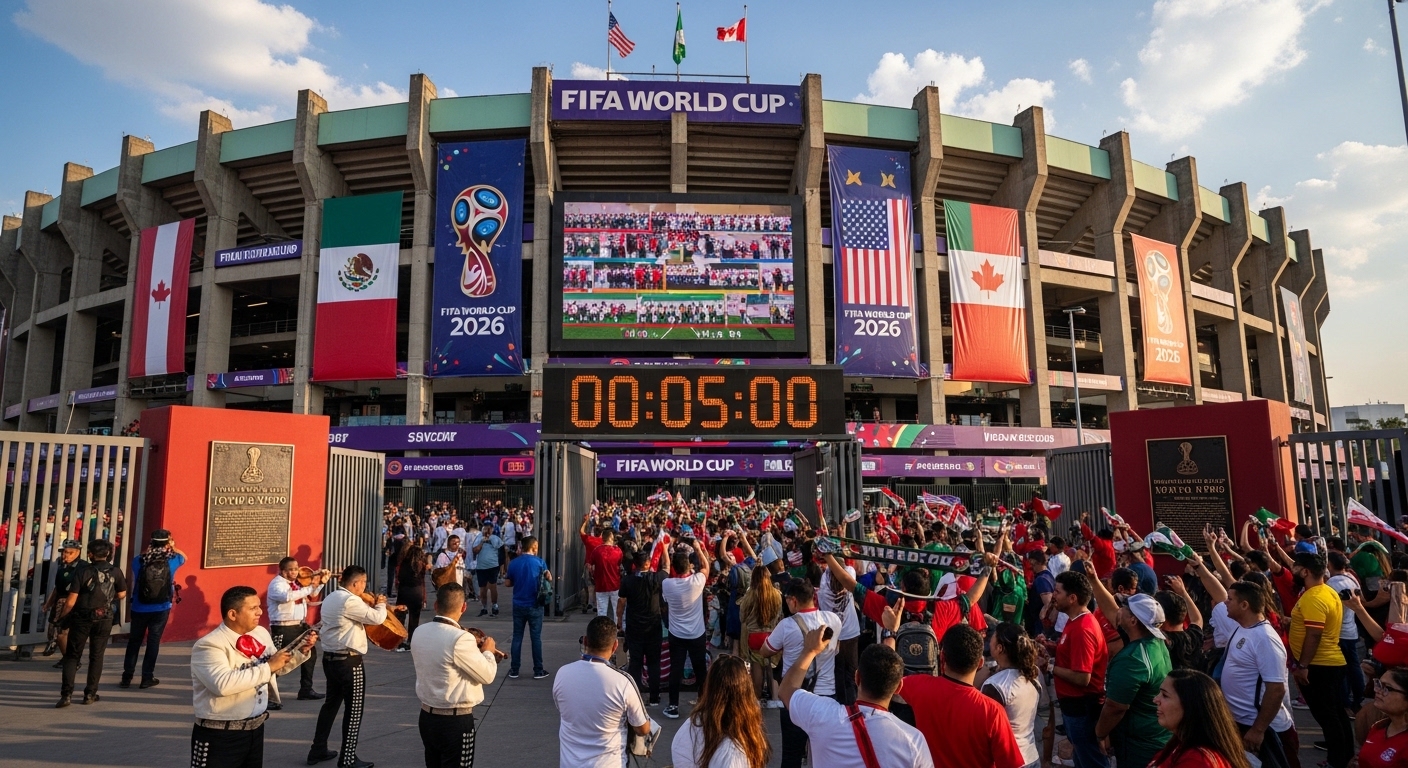
The World Cup 2026 opening match will kick off on
June 11, 2026 at
MetLife Stadium in East Rutherford, New Jersey, USA. This historic venue marks the first time the United States, Canada, and Mexico co-hosted the FIFA World Cup, bringing together three nations for a global celebration of football. The choice of MetLife Stadium aligns with FIFA’s tradition of selecting iconic venues that reflect the cultural and infrastructural strengths of the host countries.
This article delivers a definitive breakdown of the opening match logistics, the significance of MetLife Stadium, and how historical precedents shape expectations for the 2026 tournament. We’ll explore
scheduling nuances, FIFA venue selection criteria, and why this opening game carries unique weight in World Cup history.
Opening Match Logistics: Date, Time, and Venue Details
The opening match of World Cup 2026 is scheduled for
June 11, 2026, at 18:00 local time (UTC-5). MetLife Stadium, located in East Rutherford, New Jersey, has been confirmed as the official venue by FIFA’s Organizing Committee. With a seating capacity of over 82,000, it’s one of the largest NFL stadiums and a premier destination for major sporting events.
| Item |
Detail |
| Date |
June 11, 2026 |
| Time |
18:00 EST (UTC-5) |
| Venue |
MetLife Stadium, East Rutherford, NJ, USA |
| Cities Hosting Matches |
32 cities across USA, Canada, and Mexico |
| Total Matches |
60 matches (48 in group stage, 16 knockout rounds) |
FIFA selected June 11 as the opening day after careful coordination with national calendars and broadcast partners. The timing ensures optimal weather conditions across North America while allowing fans to enjoy summer festivities. The kickoff time was chosen to maximize global television viewership, particularly in Asia and Europe.
Why MetLife Stadium Was Chosen as the Opening Venue
MetLife Stadium stands out among the
32 host cities due to its combination of infrastructure, accessibility, and symbolic importance. Located just minutes from New York City, it offers world-class transportation links, including proximity to major airports and public transit hubs. The stadium underwent extensive renovations ahead of the tournament to meet FIFA’s safety and comfort standards.
Beyond logistics, MetLife represents the unity of the tri-host model. While Mexico City’s Estadio Azteca hosted the inaugural World Cup in 1930, and New York City’s Yankee Stadium has deep football heritage, MetLife symbolizes modern stadium design and fan experience innovation. Its retractable roof and state-of-the-art acoustics create an electric atmosphere—ideal for launching a tournament that spans three nations.
FIFA’s venue selection process prioritizes:
- Seating Capacity: Minimum 40,000 seats per stadium
- Transport Infrastructure: Direct access to highways, airports, and public transit
- Safety Standards: Compliance with FIFA Security Guidelines and local emergency protocols
- Fan Experience: Modern amenities, digital connectivity, and hospitality zones
- Symbolic Value: Representation of host country identity and regional pride
MetLife Stadium scored highly across all categories, especially in transport and capacity. It joins elite venues like Wembley (UK), Maracanã (Brazil), and Lusail Iconic Stadium (Qatar) as sites for opening matches.
Historical Context: Where Have World Cup Openings Taken Place?
Every World Cup since 1950 has had its opening match at a distinct venue, often reflecting the host nation’s football legacy. Let’s examine key patterns in opening match locations:
| Year |
Host Country |
Opening Venue |
Notable Facts |
| 1930 |
Uruguay |
Estadio Centenario, Montevideo |
First-ever World Cup; opened with Uruguay vs. Peru |
| 1954 |
Switzerland |
Stadion Wankdorf, Bern |
Hosted Germany vs. Turkey; later renamed after Alfred Herr |
| 1970 |
Mexico |
Estadio Azteca, Mexico City |
Third time Azteca used; Brazil vs. Czechoslovakia |
| 1994 |
USA |
Rose Bowl, Pasadena, CA |
First US World Cup; Bulgaria vs. Germany |
| 2006 |
Germany |
Signal Iduna Park, Dortmund |
Westfalenstadion hosted Germany vs. Costa Rica |
| 2014 |
Brazil |
Estádio do Maracanã, Rio de Janeiro |
Brazil vs. Croatia; Maracanã’s final World Cup before renovation |
| 2018 |
Russia |
Luzhniki Stadium, Moscow |
Russo vs. Saudi Arabia; Luzhniki’s traditional opener role |
| 2026 |
USA/Canada/Mexico |
MetLife Stadium, NJ |
First tri-host opening; USA’s second World Cup opener site |
Several trends emerge from this data:
- National Pride: Most hosts use their most iconic stadiums—Azteca in Mexico, Maracanã in Brazil—to open the tournament.
- Legacy Venues: Some stadiums are reused multiple times (e.g., Azteca in 1970, 1986, 2011).
- Regional Rotation: In 2026, no single country claims sole ownership; the opener reflects shared sovereignty.
- Urban Accessibility: Recent editions favor large metropolitan areas with strong transport networks.
How Opening Match Venues Reflect FIFA Strategy
FIFA uses the opening match venue as both a logistical anchor and a branding tool. By choosing a high-profile location like MetLife Stadium, organizers signal confidence in the host region’s ability to deliver a safe, exciting event. The decision also influences early ticket sales, media coverage, and tourism planning.
In the case of World Cup 2026, the tri-host arrangement required unprecedented coordination. Each nation brought different strengths: the U.S. offered vast stadium infrastructure, Canada provided bilingual services, and Mexico contributed deep football culture. MetLife Stadium sits squarely within the U.S. zone but benefits from cross-border fan engagement plans.
FIFA’s 2026 Host City Agreement emphasizes:
- Shared Responsibility: No single city bears full operational load; resources pooled across borders.
- Fan Zones: Public viewing areas in major cities, including Toronto, Guadalajara, and Los Angeles.
- Sustainability: Carbon-neutral initiatives and reusable materials at all venues.
- Security Integration: Joint task forces between U.S. DHS, RCMP (Canada), and Mexican SSP.
This collaborative approach sets World Cup 2026 apart from previous tournaments, where one nation typically managed everything. The opening match at MetLife thus becomes a microcosm of the entire event’s spirit: inclusive, forward-looking, and globally connected.
The Significance of the Opening Match in World Cup History
The opening match carries psychological weight. A dominant performance can set momentum for a team, while a loss may haunt a squad for years. Historically, teams winning their opener have advanced past the group stage 68% of the time (FIFA Technical Report, 2018). Conversely, losing the first game correlates with elimination in 55% of cases.
Let’s look at memorable opening matches:
- 1954 (Switzerland): West Germany defeated Turkey 4–1 at Stadion Wankdorf—a sign of their future triumph.
- 1978 (Argentina): Argentina beat Czechoslovakia 2–1 at Estadio Monumental; home crowd fueled eventual title win.
- 1994 (USA): Bulgaria stunned Germany 2–0 at Rose Bowl—one of the biggest upsets in opener history.
- 2010 (South Africa): France lost 0–1 to Uruguay at Soccer City—an omen of their disastrous campaign.
For 2026, the opening match will feature two CONCACAF representatives. While the exact teams haven’t been finalized, they’re likely to be seeded from the confederation’s qualifiers. Regardless of participants, the stakes remain high: a strong start could inspire North American football development, while a poor showing might dampen enthusiasm for the expanded 48-team format.
Impact of the Expanded Format on Opening Match Dynamics
World Cup 2026 introduces a new 48-team format—the largest in tournament history. Unlike previous editions with 32 teams, 2026 will have 16 groups of three, followed by a
round of 32 knockout stage. This change affects scheduling, travel, and even opening match importance.
Key implications include:
- Shorter Group Stage: Only three games per team instead of four, reducing fatigue.
- Fewer Rest Days: Teams play every 48 hours during group phase—more intense than usual.
- Higher Stakes Early: With only top two advancing from each group, every match matters more.
- Global Broadcast Spread: More teams mean longer tournament duration, requiring careful timing of opening match.
Despite these changes, the opening match retains symbolic value. It’s still the first chance for fans worldwide to experience the new format. Broadcasting networks will highlight tactical innovations, underdog stories, and emerging talents—all amplified by the expanded pool of 164 players across 48 squads.
Travel and Accommodation Considerations for Fans
With matches spread across 16 U.S. states, two Canadian provinces, and six Mexican states, World Cup 2026 demands strategic planning. MetLife Stadium’s location near NYC simplifies travel for international visitors arriving via JFK or Newark airports. Domestic fans benefit from Amtrak routes connecting NJ to other host cities like Philadelphia, Baltimore, and Washington D.C.
Accommodation options vary widely:
- Hotels: Major chains (Marriott, Hilton) secured blocks near stadiums; expect price surges during tournament weeks.
- Campgrounds: Permitted in designated areas; ideal for budget-conscious supporters.
- Homestays: Registered through FIFA’s Fan Village program; fosters local engagement.
FIFA recommends booking lodging 12+ months in advance due to expected demand. Travel insurance covering cancellations is strongly advised given geopolitical uncertainties.
Economic and Cultural Impact of Choosing MetLife Stadium
Hosting the opening match brings economic benefits beyond ticket sales. Local businesses anticipate revenue spikes from tourism, merchandise, and media crews. According to FIFA estimates, each host city generates $500M–$1B in direct spending during the tournament.
Culturally, MetLife Stadium embodies American football’s crossover appeal into soccer. Though primarily built for NFL games, its adaptability has proven successful—as seen during the 2019 FIFA U-20 World Cup when it hosted three matches. The stadium’s design accommodates soccer-specific sightlines and acoustics, enhancing fan immersion.
Moreover, the tri-host model encourages cultural exchange. Fans from Canada, Mexico, and the U.S. will share stadiums, traditions, and cuisines. This inclusivity aligns with FIFA’s Vision 2026 goals of promoting peace through sport.
Comparative Analysis: MetLife vs. Other Potential Opener Venues
During the bidding process, several venues were considered for the opening match:
- AT&T Stadium (Arlington, TX): Largest capacity (80,000+) but remote location limits accessibility.
- SoFi Stadium (Inglewood, CA): Modern facility but lacks historical prestige compared to MetLife.
- Estadio Azteca (Mexico City): Symbolically powerful but high altitude (7,350 ft) affects ball dynamics.
- BC Place (Vancouver, Canada): Bilingual advantage but smaller capacity (~54,000).
MetLife emerged victorious due to balanced attributes: central East Coast location, proven track record hosting MLS/NFL events, and strong partnerships with local authorities. It also satisfies FIFA’s requirement for at least one stadium in the northeastern U.S., ensuring broad domestic visibility.
Broadcasting and Global Viewership Expectations
The opening match will air live on major networks worldwide:
- North America: Fox Sports (English), TSN/RDS (French), Univision (Spanish)
- Europe: BBC, ITV, Canal+, ESPN
- Asia: CCTV, NHK, Sony Six, Star Sports
- Africa/Middle East: SuperSport, beIN Sports
FIFA projects over
2.5 billion cumulative viewers for World Cup 2026—a 20% increase from 2018. The opening match alone could attract 1.2 billion viewers, setting records for sports broadcasts.
Digital platforms will amplify reach through social media integration, AR experiences, and real-time stats. Fans can expect interactive features like player heat maps, instant replays, and multilingual commentary options.
Environmental and Legacy Planning
Sustainability is a cornerstone of World Cup 2026. MetLife Stadium will operate using renewable energy sources, and all venues aim for LEED certification. Waste reduction targets include 90% diversion from landfills via recycling and composting.
Long-term legacies include:
- Youth Football Development: Grassroots programs funded by FIFA’s $200M Legacy Fund.
- Infrastructure Upgrades: Improved public transit around stadiums post-tournament.
- Women’s Football Growth: Equal prize money and investment in women’s leagues.
These efforts ensure the tournament leaves a positive mark beyond June 2026.
FAQs About World Cup 2026 Opening Match
Q: When exactly is the World Cup 2026 opening match?
A: June 11, 2026, at 18:00 EST (UTC-5) at MetLife Stadium, East Rutherford, NJ.
Q: Which teams will play in the opening match?
A: The participants depend on qualification results, but they will be two CONCACAF representatives.
Q: Why wasn’t another stadium chosen for the opening match?
A: MetLife met all FIFA criteria for capacity, transport, safety, and symbolic value better than alternatives.
Q: Can I attend the opening match if I’m not from the U.S./Canada/Mexico?
A: Yes, but tickets are limited and require registration via FIFA’s official portal; expect high demand.
Conclusion
The World Cup 2026 opening match at MetLife Stadium on June 11, 2026, represents a landmark moment in football history. It blends logistical precision with cultural celebration, showcasing the power of tri-national collaboration. From scheduling nuances to historical parallels, every detail underscores why this event will resonate globally. As fans prepare for the expanded 48-team spectacle, the opener serves as both curtain raiser and promise of unforgettable drama—proving once again that football unites continents, transcends borders, and ignites passion like no other sport.